5 positive takeaways from the Blackhawks season
The 2025-2026 season has been filled with ups and downs for the Blackhawks — from starting the season playoff hopeful to ending the season praying on the lottery balls. With how this season has ended and the awful taste left in the mouths of the fans, it’s hard to remember that there are still positives to take away.
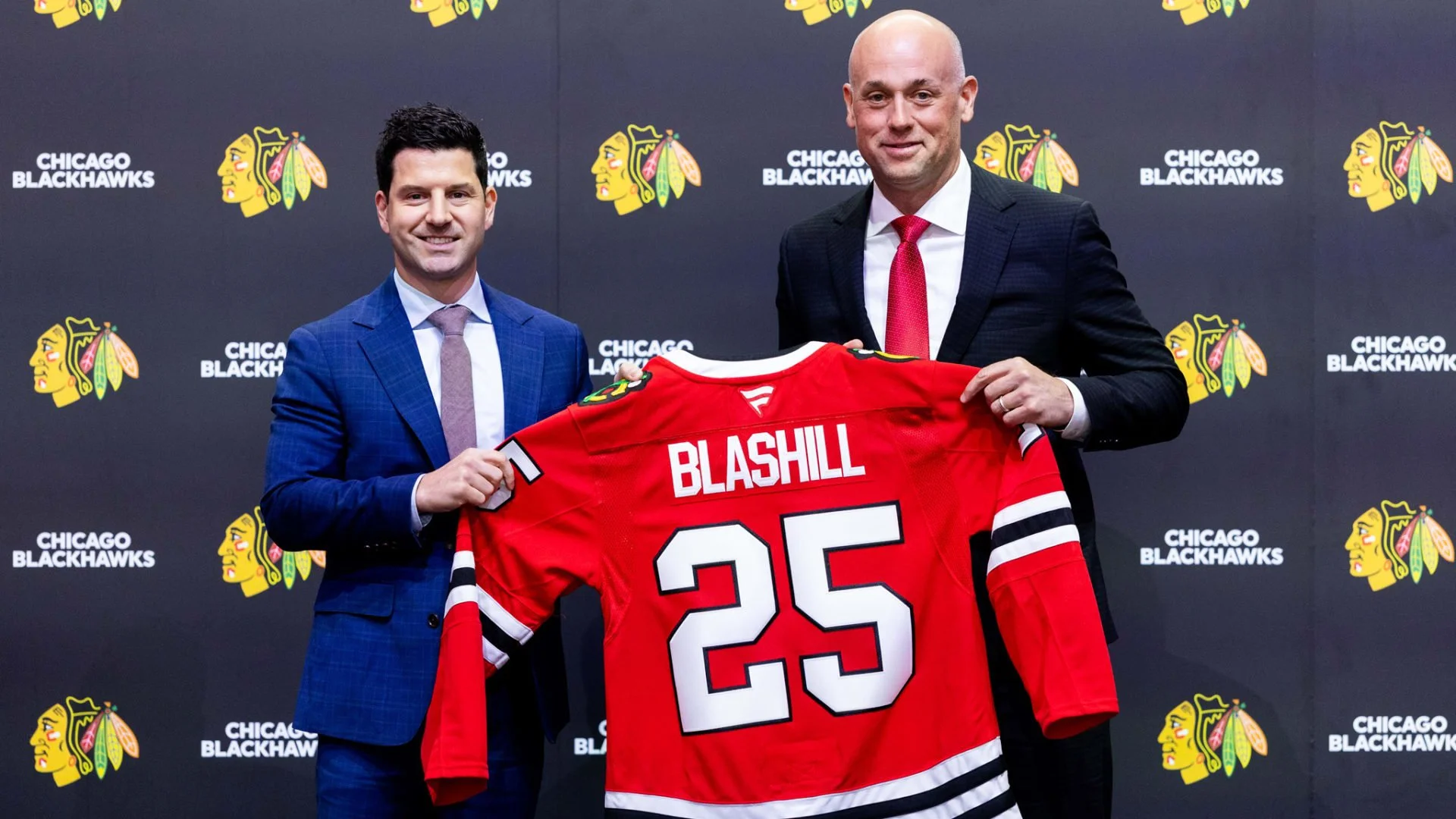
Photo by: Chicago Blackhawks
Coming into this season, the expectation on the Blackhawks was to take a significant jump forward now that the majority of the youngsters had arrived. For the first 2+ months of the season, the Blackhawks were outplaying those expectations. They were in the wildcard race, the young guns were showing us what’s to come, and the veterans were leading by example. That all changed when Connor Bedard got injured and was sidelined for a month, and on top of that, second line center Frank Nazar also missed significant time. The Blackhawks struggled to stay competitive throughout the majority of this stretch. Bedard and Nazar would both return but didn’t find their games right away. It took Bedard some time to get back to producing the same way he had at the start of the season, and Frank Nazar would keep struggling with injuries and the sophomore inconsistencies most 2nd year players face. At this point it was too late in the season to talk playoffs, and the departure of key veterans just made things more difficult for an already spiraling team. As the year has wrapped up things have looked bleak and it has become easier and easier to forget how this team can be. I have picked out what I believe are the 5 biggest positives from a season filled with high high’s, low low’s, and frequent inconsistencies.
I. Connor Bedard IS that guy
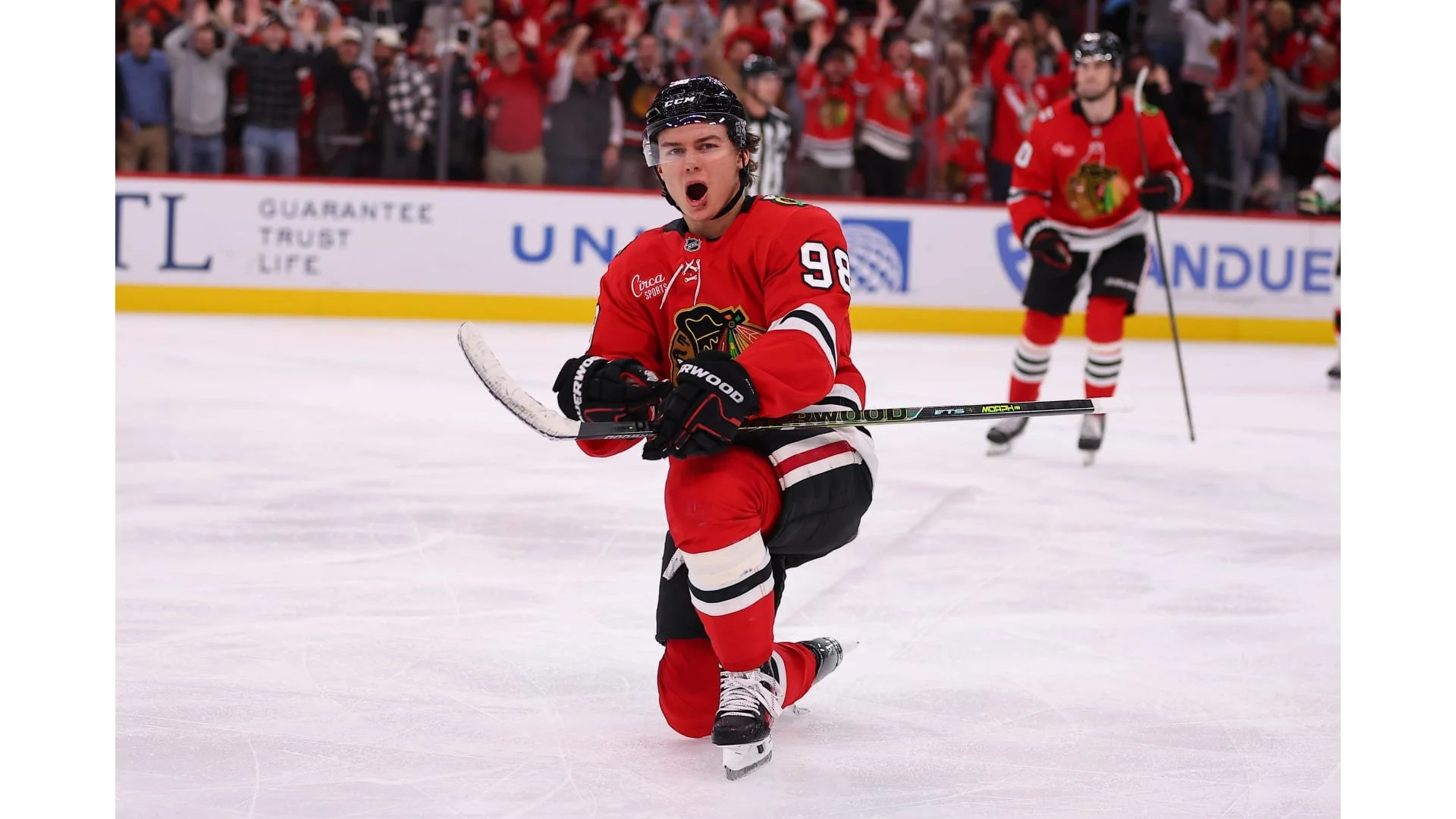
Photo by: Chicago Blackhawks
Before December 12, 2025 when Bedard suffered his shoulder injury — there were already talks of him being a top 5 scorer in the league, the word “generational” was back on the table, and there were even talks of the Hart trophy if the team success lasted. Bedard had put up 19 goals and 44 points in just 31 games (3rd in points and and 4th in goals amongst the NHL) an 82-game pace of 116 points. Not only was Connor Bedard scoring the lights out of opponents every night, he was also winning faceoffs, playing physical hockey, not backing down from post whistle scrums, and playing a more well-rounded 200ft game. He truly was the generational player he was drafted to be, and he was changing the league-wide narrative around the Chicago Blackhawks. Things all changed after the injury — you might ask, why was he only able to put up 31 points in 38 games played after he came back from injury? and why should we expect pre-injury Bedard next season rather than post-injury Bedard?
When Bedard came back from injury on January 9th things weren’t quite the same as when he left. 2nd line Center Frank Nazar was still out with injury, and more importantly — linemate Andre Burakovsky would go into a slump so low it doesn’t sound real. Burakovsky only managed to put up 4 points in 37 games from January 9th onward. To put that into perspective, Burakovsky had 21 points in 26 games playing with Connor Bedard before the injury. Bedard himself was also not 100% after he came back, he was slower, less aggressive on pucks, wasn’t allowed to take faceoffs, and hesitant to shoot the puck. When you lose a key piece in the top 6, have your winger and running mate basically forget how to play hockey (Burakovsky) and aren’t even 100% healthy yourself, it is going to be a struggle to get back to how it was — that was the case for Bedard.
I think it is fair to expect a fresh and fully healthy Bedard to get back to that 116 point pace, especially if he can get some better fitting linemates. Possibly Frondell? Kantserov? Nazar? or Maybe General Manager Kyle Davidson finally adds someone via trade? Whatever ends up happening with line combos next season, the expectation on Bedard is to be that player again.
II. Wyatt Kaiser is a top 4 Defensemen
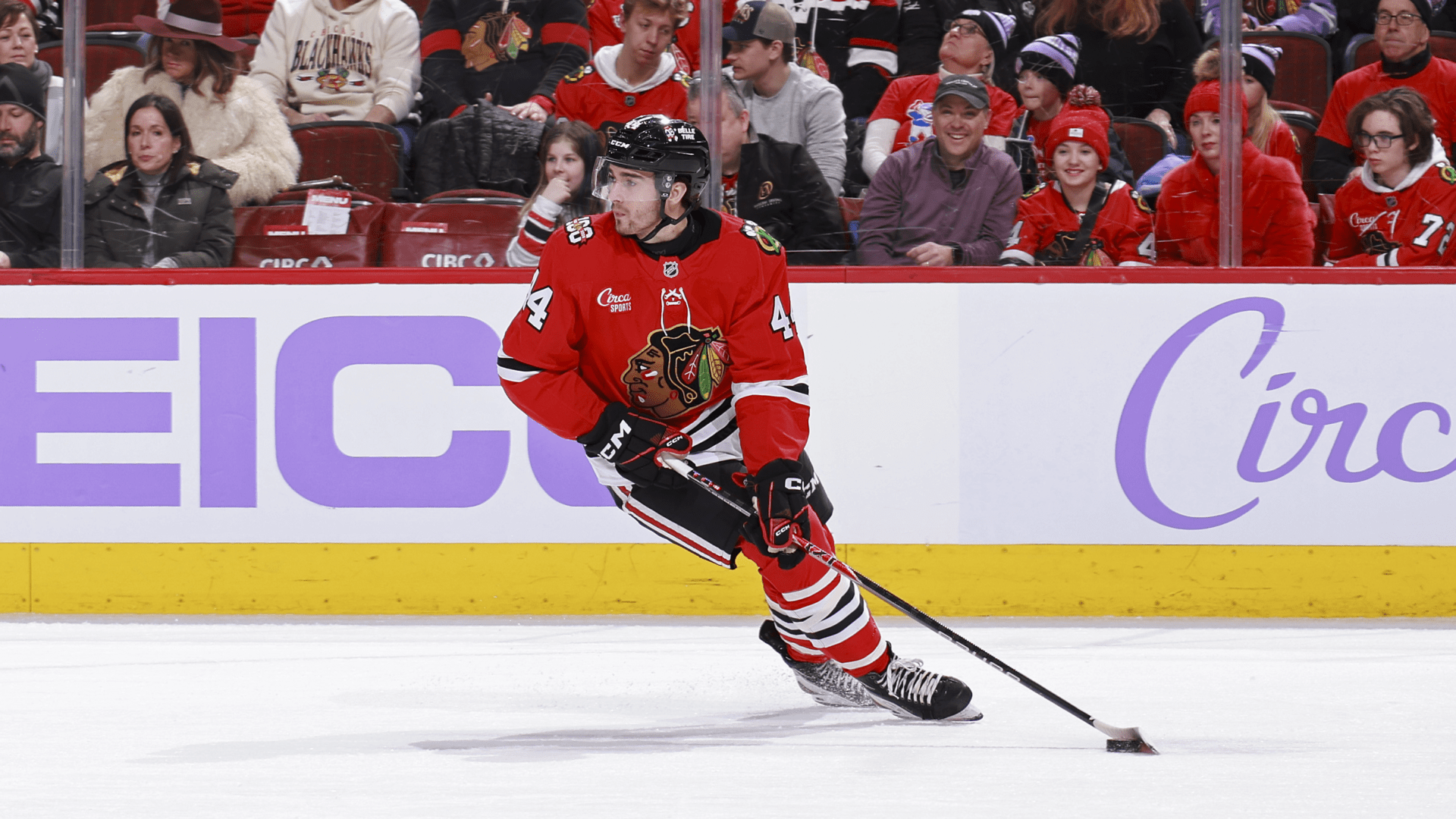
Photo by: Chicago Blackhawks
Wyatt Kaiser certainly wasn’t the biggest or flashiest name on the roster sheet coming into this season, but after 82 games the 23 year old has arguably been the Blackhawks most consistent defensemen. If you remember, Kaiser was an RFA all summer last year and didn’t sign his contract until the very start of training camp. A lot of people were confused when the deal came out to 2 years $3.4 million ($1.75 million AAV) given the fact that it took all summer and Kaiser had just come off his longest NHL season yet (57 games). But from game 1 of this season Kaiser has shown why he held out, he knew his value.
With the top 4 starting to come together on the back end, Wyatt Kaiser has made himself part of the long term plans. He has played primarily on the second pairing with Levshunov or Rinzel, although Blashill deploys his defense based on whose playing well that game rather than pair 1 gets most ice time, then pair 2, then pair 3. So Kaiser has found himself leading the Blackhawks in ice time on many nights. He ended this season with 17 points in 77 games.
One thing makes Wyatt Kaiser so lethal in all 3 zones is his skating. Kaiser isn’t necessarily the fastest guy on the ice (although he can move fairly quickly) but he picks his routes and makes decisions so quickly and effectively. He is a master of skating the puck out of trouble in his own end. where I have noticed this most is on the breakout — if he has 1 or 2 guys on him he is able to use his acceleration and deceptive routes to skate the puck out of trouble and out of the D-zone by himself. This also reflects in the O-zone, Kaiser has become a master of walking the blueline to create open lanes for himself and his teammates. We see this style of play a lot with Quinn Hughes and Cale Makar. Now, Wyatt Kaiser is not Quinn Hughes or Cale Makar but he uses the same smooth skating, tricky edge work, and creativity to create offense. There is a reason half the fanbase was calling for him to be on the powerplay as the season was wrapping up.
Kaiser plays with the drive and athleticism of a 23 year old but his mentality and hockey IQ are much wiser. Wyatt Kaiser was tasked with guiding 20 year old Artyom Levshunov for a large majority of this season and at the end of the 2024-2025 season as well. To his credit, he did a great job. While Levshunov adjusts and grows at the NHL level as an offensive defensemen, he has to battle through making mistakes, turning pucks over, and being out of position — and when Wyatt Kaiser is on the ice with him, he is always there to bail Levshunov out. He also is really good at bailing himself out, if he turns the puck over he is always first back to cover himself. Not only does he bail Levshunov out but he guides him. If you watched a majority of Blackhawks games over the course of the year or if you were in attendance live at all, you certainly would have been able to hear Kaiser being extremely vocal with Levshunov. “Arty get ready” or “Arty take him”. Little things like that make a huge difference. Communication is a huge part of the game and Kaiser is a master of it.
His stick work is another part of his game worth noting. Kaiser isn’t the most physical guy, although he doesn’t shy away from contact. Kaiser is great with his stick, checking guys of the rush, lifting a stick on a backcheck, blocking passing lanes, etc. This ability resembles that of Blackhawks legend Duncan Keith, who was the master of stick checking.
I think it is fair to have high expectations for Kaiser next season. He is a solid middle pair 2-way defensemen, who you can trust in any scenario, who is still only 23 years old.
III. Anton Frondell’s arrival
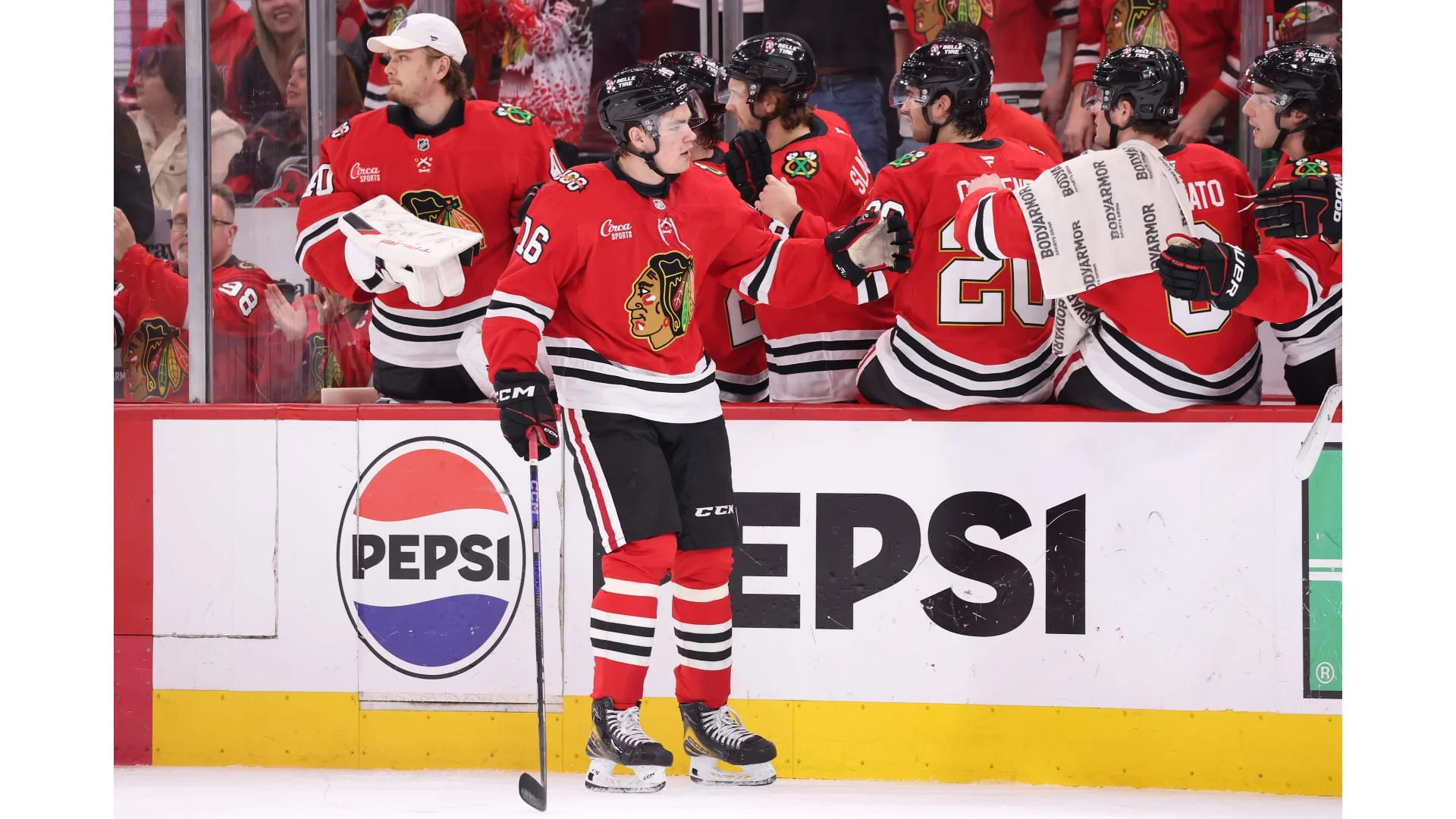
Photo by: Chicago Blackhawks
It feels like we waited forever for Frondell to arrive — but it was well worth the wait. From puck drop against the Islanders in his debut, Frondell fit right into the pace of the NHL. Frondell was able to put up 3 goals and 9 points in 12 games (including 1 multi-goal game), but his effectiveness at the NHL level goes beyond that. He uses his 6’1 198lb frame to his advantage. An area where Frondell really impressed me was his board work and ability to protect the puck. Frondell has an ability to create plays and opportunities off the wall using his vision to scan, size to protect the puck, and the skill to execute.
Coming into the season the main talking point with his game was hit shot. Frondell has an elite level release he can get off anywhere in the offensive zone. Looking at the Blackhawks powerplay set up to end the season, Assistant Coach Mike Vellucci was rolling out a 5 forward unit for the man advantage. With Connor Bedard quarterbacking at the top of the zone and Anton Frondell on the right flank as a left shot, the two were able to connect often with a Frondell one timer that was dangerous every time. With multiple posts hit and rebounds created, Frondell’s wicked one timer from the right dot is going to be a weapon for years to come.
A promising note to Frondell’s game is the fact that he was able to drive his own line in the top 6 at just 18 years old. He centered wingers Ilya Mikheyev and Tyler Bertuzzi. No disrespect to either of those two players, but they aren’t exactly “stars”. Yet that second line was a constant positive in the final 12 games. Bertuzzi’s work ethic and nose for the net combined with Mikheyev’s speed and tenacity on the puck compliment Frondell’s ability to find himself wide open in the offensive zone and in front of the net for scoring chances (first NHL goal being a prime example).
Despite questions around what the lineup will look like next year, it is safe to say Frondell is going to have top 6 responsibility over 84 games at just 19 years old. While he will likely have ups and downs and experience developmental challenges as the year goes on, all signs suggest he will be able to handle the big minutes and matchups. His game is already very mature after playing professional hockey in Sweden.
IV. Nick Lardis’ early success
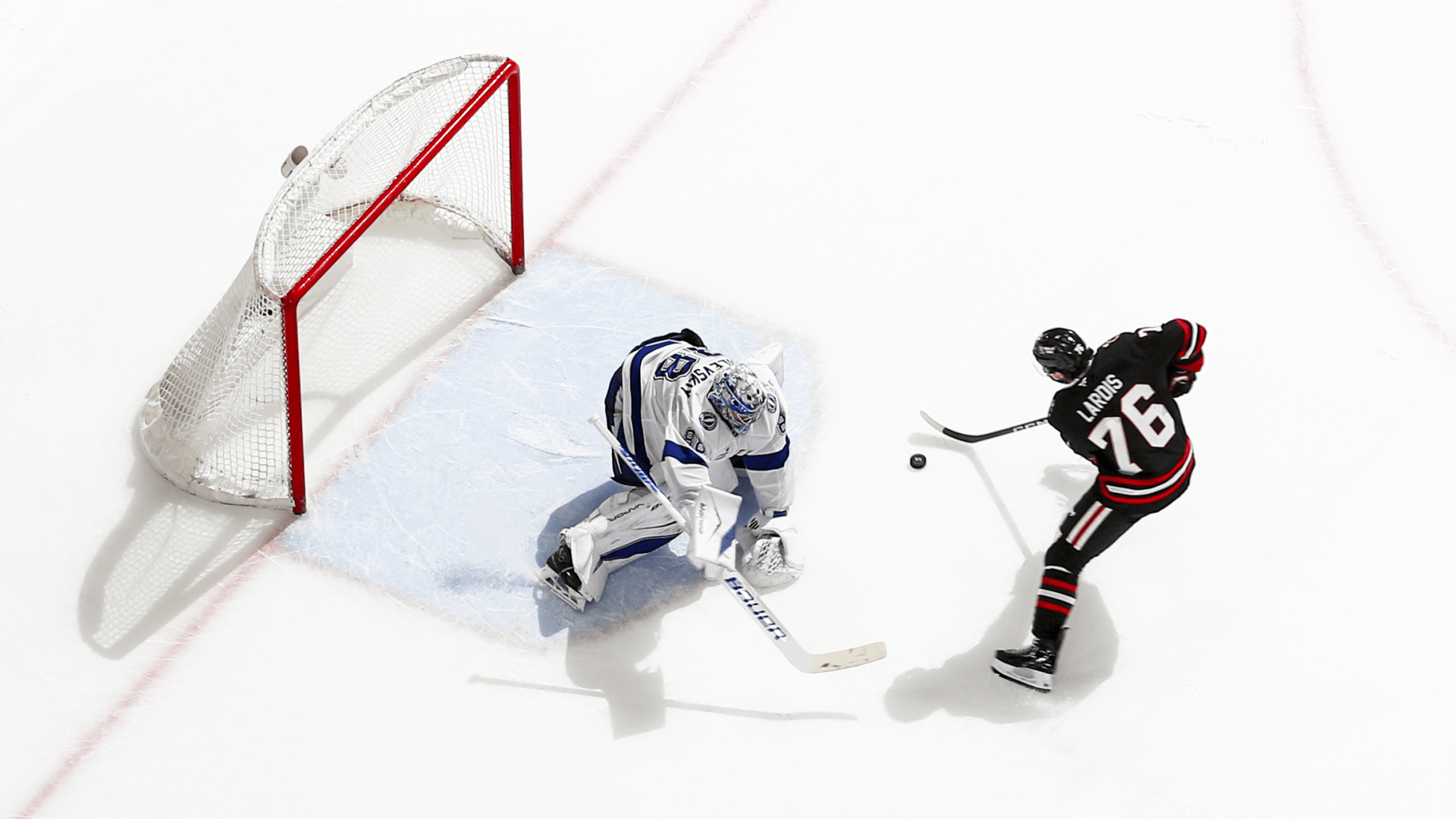
Photo by: Chicago Blackhawks
With more and more of the young core arriving, Nick Lardis’ arrival is perhaps ahead of schedule — his production certainly is. The “undersized” 2023 3rd round pick would make headlines in his draft +1 year by scoring 71 goals in 65 games in the OHL with the Brantford Bulldogs. Taking his first step into professional hockey this year with the Rockford IceHogs of the AHL, the big question was if his scoring ability would translate to the pro game. It certainly did. Lardis potted 18 goals and 32 points in 35 games with the IceHogs, making the future call-up inevitable.
After a permanent call-up, Lardis played a role on the 4th line where he struggled to produce with limited minutes and lesser skilled linemates. Eventually Lardis would play his way into the top 6 and the production started to ramp up. The chemistry with Frank Nazar and Tyler Bertuzzi was immediately noticeable. He would end the season on the top line with Connor Bedard.
After playing 41 games in his rookie season, Lardis had 10 goals and 15 points (a 20 goal pace over 82). He would end the season particularly hot with 5 goals and 7 points in the last 13 games (a 31 goal 44 point pace over 82). Lardis was also able to make strides in his 2-way game. He certainly isn’t going to win a Selke Trophy anytime soon but It seems as though we are watching at the very least a quality depth scorer emerge. Lardis certainly has top 6 potential as he is only 20 years old. For a 3rd round pick, that’s not too bad.
With the amount of top 6 talent here and on the way (Bedard, Frondell, Nazar, Bertuzzi, Kantserov, and a potential top pick forward this draft) Nick Lardis has competition, but that is a good thing.
V. Spencer Knight is a true starter
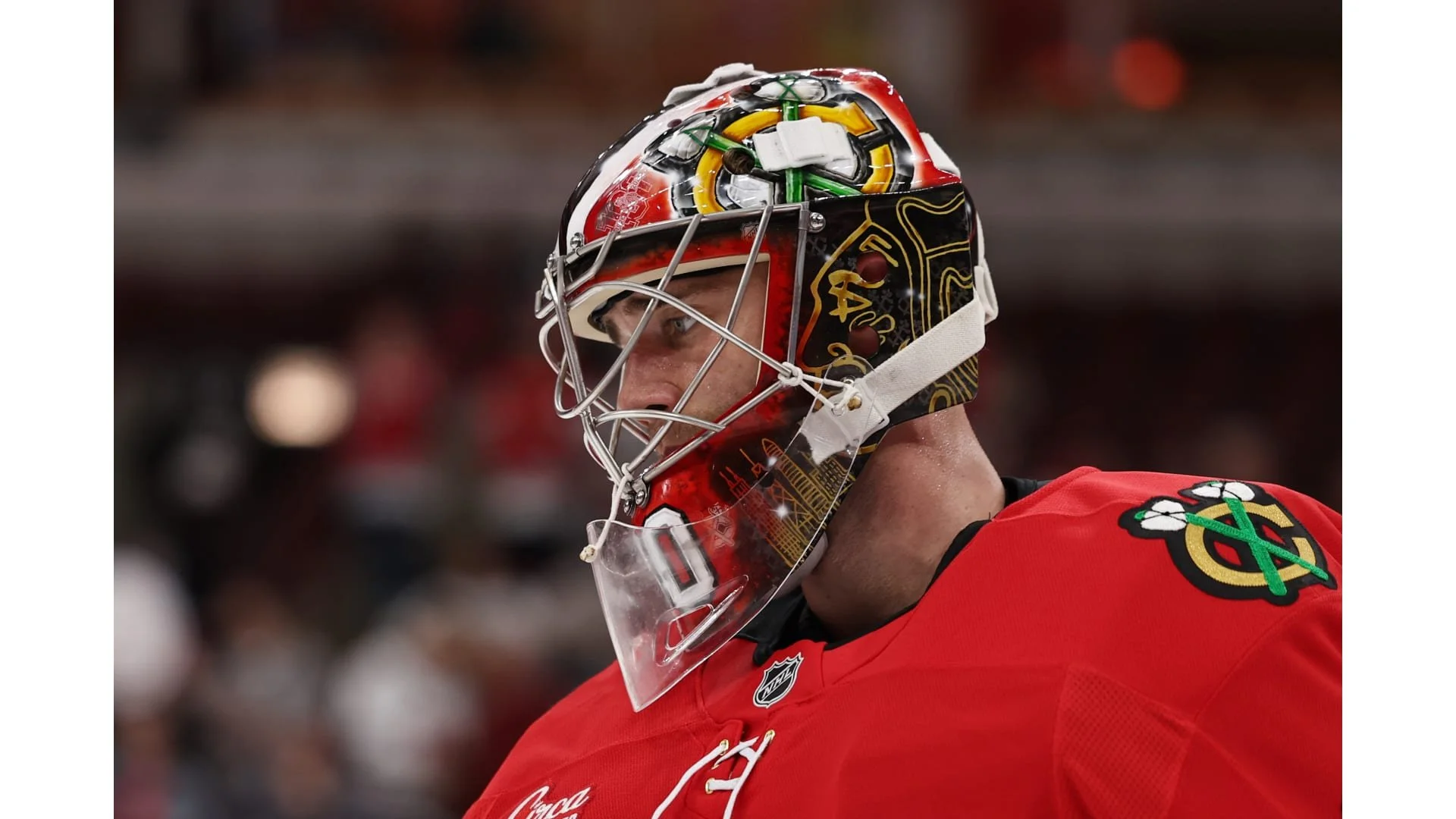
Photo by: Chicago Blackhawks
One area that seems certain for the Blackhawks is goaltending. Knight is now coming off his first season as a starter where he put up a .902 save percentage. That number may not jump off the page but considering the context, but he had a great season. Having the season that he did while playing a career high 55 games at 24 years old behind a young and inexperienced D-core (average age of 23.5 — even younger after the Grzelcyk injury) is quite impressive. Perhaps the most telling stat is his goals saved above expected (GSAE) — sitting at 14th in the league amongst goalies with 10.9 GSAE.
Being just 24 years old, Knight is also still going through his own development — goalies take longer than skaters to reach their potential. Part of that is finding consistency, Knight had a few ups and downs this year. For example, he had a really strong stretch in November playing 9 games and putting up a .922 save percentage (even getting 1 assist). But he also had his struggles near the end of the year, in his last 9 games he had an .869 save percentage. Now, Knight playing his first season as a starter, playing in front of the youth, not having much help in the D-zone from the forwards, and the condensed schedule due to the Olympics impacting both himself and also the rest of the team definitely played a factor in his fall off in March/April.
One important thing to note this year from Spencer Knight is that during the early stages of the season, he was able to keep the Blackhawks in most, if not all their games, even losses. Knight is the kind of goalie that can steal games for his team and keep them in it all night. Going forward, as the Blackhawks defense starts to round out and get better, Knight will only get better as well.
Stay tuned for the 5 negative takeaways from the 2025-2026 season!